
PST to AEST Converter
Eastern Australia is on daylight saving time: AEDT (UTC+11) until Sun, Apr 4, 2027.
Queensland stays on AEST (UTC+10).
Start by searching for a time zone, city, or town.
Add one or more places to compare local times, adjust the date, and share the result.
Quick answers
Selected conversion
5:00 am05:00 PDT (UTC-7), Oct 29, 2026 = 10:00 pm22:00 AEST (UTC+10), Oct 29, 2026
PDT is 17 hours behind AEST.
PST (US winter time, UTC-8) and AEST examples
These examples always use PST (UTC-8) and AEST (UTC+10). They stay the same when you change the date or time above. The selected conversion may differ when daylight saving time applies.
PST is 18 hours behind AEST.
PST is US Pacific winter time (early November to mid-March). The rest of the year Los Angeles uses PDT (UTC-7), one hour later. For Pacific Time that follows daylight saving time, use PT to AEST. For daylight-time examples, use PDT to AEST.
How the time difference changes
For most of the year, PDT is 17 hours behind AEST. From Nov 1, 2026 to Mar 14, 2027, PST is 18 hours behind AEST.
For most of the year, working hours of 9:00 am to 6:00 pm in PDT correspond to 2:00 am (next day) to 11:00 am (next day) in AEST. At other times of the year, working hours of 9:00 am to 6:00 pm in PST correspond to 3:00 am (next day) to 12:00 pm (next day) in AEST.For most of the year, working hours of 09:00 to 18:00 in PDT correspond to 02:00 (next day) to 11:00 (next day) in AEST. At other times of the year, working hours of 09:00 to 18:00 in PST correspond to 03:00 (next day) to 12:00 (next day) in AEST.
Compare PST time with AEST time, including current local time, UTC offsets, time difference, daylight saving changes, working hours, and shareable meeting times.
Time Difference
Pacific Daylight Time is 17 hours behind Australian Eastern Standard Time.
5:00 am05:00 in PDT is 10:00 pm22:00 in AEST
PDT to AEST call time
Best time for a conference call or a meeting is between 4pm-6pm16:00-18:00 in PDT which corresponds to 9am-11am09:00-11:00 in AEST (next day)
5:00 am05:00 Pacific Daylight Time (PDT). Offset UTC -7:00 hours
10:00 pm22:00 Australian Eastern Standard Time (AEST). Offset UTC +10:00 hours
5:00 am05:00 PDT / 10:00 pm22:00 AEST
Choose an hour to update the converter. Day labels such as “next day” or “+1” are relative to the selected date in the first column. Use Up and Down arrow keys, Home or End to move between hours, then Enter or Space to select.
| PDT | AEST |
|---|---|
| 5:00pm | |
| 6:00pm | |
| 7:00pm | |
| 8:00pm | |
| 9:00pm | |
| 10:00pm | |
| 11:00pm | |
| 12:00am next day | |
| 1:00am next day | |
| 2:00am next day | |
| 3:00am next day | |
| 4:00am next day | |
| 5:00am next day | |
| 6:00am next day | |
| 7:00am next day | |
| 8:00am next day | |
| 9:00am next day | |
| 10:00am next day | |
| 11:00am next day | |
| 12:00pm next day | |
| 1:00pm next day | |
| 2:00pm next day | |
| 3:00pm next day | |
| 4:00pm next day | |
| 17:00 | |
| 18:00 | |
| 19:00 | |
| 20:00 | |
| 21:00 | |
| 22:00 | |
| 23:00 | |
| 00:00 next day | |
| 01:00 next day | |
| 02:00 next day | |
| 03:00 next day | |
| 04:00 next day | |
| 05:00 next day | |
| 06:00 next day | |
| 07:00 next day | |
| 08:00 next day | |
| 09:00 next day | |
| 10:00 next day | |
| 11:00 next day | |
| 12:00 next day | |
| 13:00 next day | |
| 14:00 next day | |
| 15:00 next day | |
| 16:00 next day |
Pacific Standard Time
Offset: PST is 8 hours behind Greenwich Mean Time (GMT).
Countries using this time zone: Mexico, United States
Principal Cities: The largest city in the PST time zone is Los Angeles in the United States, with about 3.821 million people. Other major cities in this time zone include Tijuana, San Diego, Mexicali, San Jose.
French: HNP - Heure Normale du Pacifique
Spanish: PT - Tiempo del Pacífico, PT - Zona Noroeste
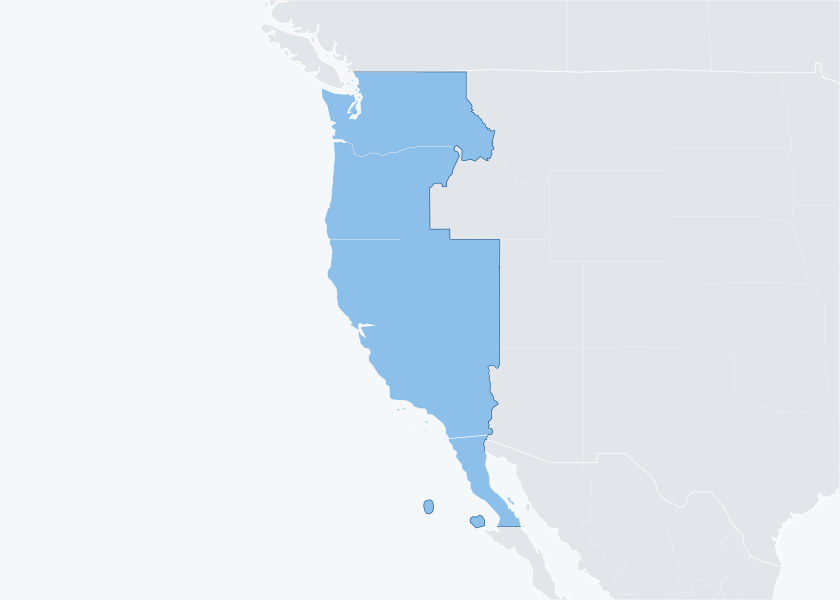
Today the shaded areas are on UTC−7 (PDT).
Daylight Saving: This is a standard time zone. During summer, some places set clocks forward one hour for daylight saving time and observe Pacific Daylight Time (PDT).
End: Pacific Standard Time (PST) ended on Sunday, March 8, 2026 at 2:00 am02:00 local time and clocks were set one hour forward to Sunday, March 8, 2026, 3:00 am03:00 local daylight time instead. Standard time ends annually on the second Sunday of March.
Start: Pacific Standard Time (PST) starts on Sunday, November 1, 2026 at 2:00 am02:00 local time and clocks are set one hour back to Sunday, November 1, 2026, 1:00 am01:00. Standard time starts annually on the first Sunday of November.
See USA daylight saving time and upcoming clock changes worldwide.
PST representations, usage and related time zones
- -08 - basic short
- -0800 - basic
- -08:00 - extended
- -0800 - sign character (-) followed by a four digit time providing hours (08) and minutes (00) of the offset. Indicates an offset of eight hours to the west of the zero meridian.
- Uniform - Military abbreviation for PST
- U - short form of 'Uniform'
- America/Ensenada
- America/Los_Angeles
- America/Santa_Isabel
- America/Tijuana
- America/Vancouver
- Canada/Pacific
- Mexico/BajaNorte
- PST8PDT
- US/Pacific
- Pacific Standard Time - UTC -8
- Pitcairn Standard Time - UTC -8
- AKDT - Alaska Daylight Time
- PST - Pacific Standard Time
- PT - Pacific Time
- PST - Pitcairn Standard Time
- U - Uniform Time Zone
Australian Eastern Standard Time
Offset: AEST is 10 hours ahead of Greenwich Mean Time (GMT).
Countries using this time zone: Australia
Principal Cities: The largest city in the AEST time zone is Sydney in Australia, with about 5.639 million people. Other major cities in this time zone include Melbourne, Brisbane, Gold Coast, Newcastle.
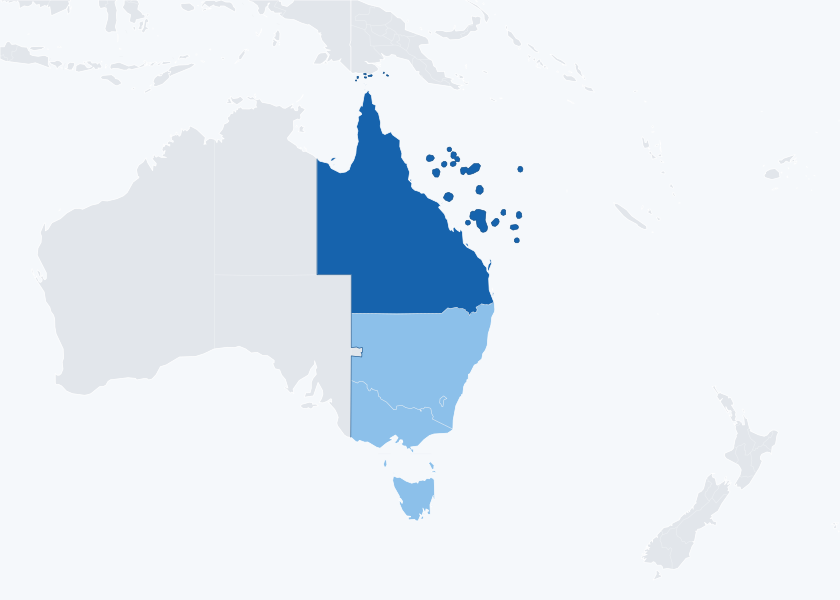
Today the lighter areas are on UTC+11 (AEDT).
Daylight Saving: This is a standard time zone. During summer, some places set clocks forward one hour for daylight saving time and observe Australian Eastern Daylight Time (AEDT).
End: Australian Eastern Standard Time (AEST) ended on Sunday, October 4, 2026 at 2:00 am02:00 local time and clocks were set one hour forward to Sunday, October 4, 2026, 3:00 am03:00 local daylight time instead. Standard time ends annually on the first Sunday of October.
Start: Australian Eastern Standard Time (AEST) starts on Sunday, April 4, 2027 at 3:00 am03:00 local time and clocks are set one hour back to Sunday, April 4, 2027, 2:00 am02:00. Standard time starts annually on the first Sunday of April.
See Australia daylight saving time and upcoming clock changes worldwide.
Australian Eastern Standard Time (AEST) is used in Queensland, Victoria, Tasmania, New South Wales (except Broken Hill), Australian Capital Territory and in folling major cities Brisbane, Sydney, Melbourne, Hobart, Canberra
Only part of Australia observe daylight saving. It is used in New South Wales, Victoria, South Australia, Tasmania, and the Australian Capital Territory. Daylight saving is not observed in Queensland, Western Australia or the Northern Territory.
AEST representations, usage and related time zones
- +10 - basic short
- +1000 - basic
- +10:00 - extended
- +1000 - sign character (+) followed by a four digit time providing hours (10) and minutes (00) of the offset. Indicates an offset of ten hours to the east of the zero meridian.
- Kilo - Military abbreviation for AEST
- K - short form of 'Kilo'
- Antarctica/Macquarie
- Australia/ACT
- Australia/Brisbane
- Australia/Canberra
- Australia/Currie
- Australia/Hobart
- Australia/Lindeman
- Australia/Melbourne
- Australia/NSW
- Australia/Queensland
- Australia/Sydney
- Australia/Tasmania
- Australia/Victoria
- AEST - Australian Eastern Standard Time
- CHUT - Chuuk Time
- ChST - Chamorro Standard Time
- K - Kilo Time Zone
- KDT - Korea Daylight Time
- PGT - Papua New Guinea Time
- VLAT - Vladivostok Time
- YAKST - Yakutsk Summer Time
- YAPT - Yap Time